
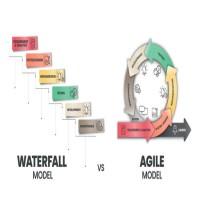
The waterfall model is a well-known project management methodology for guiding your process and project phases. Its thorough planning, attention to detail, and linear implementation make it incredibly effective.
In this article, we define the waterfall methodology, describe the steps used in this cascade process, compare it to the agile approach to project management and software development, and discuss some of the waterfall method's benefits and drawbacks.
What exactly is the waterfall method?
Waterfall technique is a project management system that addresses development in a linear and sequential, or cascading, fashion. It is also known as the linear sequential life cycle or waterfall model. Using this strategy, project development teams follow a logical path across the software development life cycle (SDLC). Once the preceding stage has been accomplished, the procedure advances to the next phase of the project.
Even if its popularity has waned in recent years in favour of increasingly agile techniques, the waterfall model's logical basis and ease of execution keep it popular in the business. This strategy collects customer and stakeholder needs at the start of the project and then uses them to construct a sequential plan to meet them. The waterfall approach is most typically employed in software development, although it may also be applied in other IT projects and in construction.
The waterfall method's stages
The waterfall approach is systematic by nature and guides a project through simple phases. This approach normally consists of five to seven steps. Though the titles and amount of phases may differ based on the developer or project, the ideas are typically the same. The waterfall model's basic phases are as follows:
1. Prerequisites
At the start of the project, the client needs for the end product are gathered and assembled into a requirements document to guide the process. These requirements usually state what the application should perform without addressing how it will achieve it. By capturing requirements from the outset of the project, it avoids the need for additional client participation and helps the team to plan each subsequent phase.
2. Evaluation
This is the step in which you go over the criteria and create a design to satisfy them. After gathering the requirements, the system is examined to determine the tools required and to generate the models that will be utilised in the completed application. Your team determines the path it will take to produce a solution as well as the applicable requirements.
3. Style
The design step is divided into two parts: logical design and physical design. During the logical design subphase, solutions to satisfy the required requirements are brainstormed. The theoretical concepts are converted into tangible plans and design requirements, such as services, data layers, and programming languages, during the physical design subphase.
4. Application
The actual code is created during this phase to fulfil the standards, models, and needs stated in the preceding phases. Some testing may occur, and if considerable modifications are required during this stage, it may be necessary to return to the design phase.
5. Evaluation
After the code has been produced, beta testers, quality assurance, and any other appropriate testers thoroughly examine the programme to identify any bugs or faults in the software. This phase, often known as the verification phase, frequently involves a coding phase repetition to resolve any flaws discovered. This step may occasionally include the client, letting them to test the product to check that all criteria have been satisfied.
6. Care and upkeep
The application is ready for release after testing is done. This last step frequently comprises of continuing maintenance, which includes maintaining the programme updated and effective, as well as fixing any problems or issues that are discovered.
Agile vs. waterfall
Customer participation and linear action are the two fundamental differences between waterfall and agile methodologies. When employing the waterfall approach, each step must be finished before moving on to the next. Testing and development take place concurrently in an agile paradigm. Furthermore, the agile methodology promotes communication among testers, managers, developers, and customers throughout the development process, whereas the waterfall technique collects client requirements at the start of the project and then limits their involvement from there.
The project is planned in "sprints" rather than milestones when using an agile methodology.
Tasks are prioritised and done in short periods of time, usually every two weeks. Rather of establishing the phases at the requirements stage, all activities in this model are changeable and fulfilled dependent on several variables such as client feedback and the performance of previous sprints.
Benefits of the Waterfall Model
Though their popularity has declined over the years, waterfall methodologies may still give several benefits to the development process of a project. This is particularly true for larger companies or projects that require strict timelines and phases to steer them. Here are a few more benefits of employing the waterfall model:
It is simple to execute and maintain since each step has defined goals and deliverables.
Waterfall approaches can be more efficient because of the lack of client interaction and the inclusion of new requirements, accelerating the process and assuring speedier project completion.
The clear scope and requirements provided by waterfall enable smooth adaptability even when teams and responsibilities change.
Discipline and structure are imposed for both the project and the team working on it.
It is suitable for businesses and teams that require a data-driven and goal-oriented structure.
Because the project calendar is established from the start, it enables for more precise assessment of deadlines, resources needed, and project budget.
Progress is easily quantifiable.
The waterfall model's drawbacks
Though the waterfall technique has numerous advantages, improvements in development and technology have shown that the agile method is more effective in most instances. Here are some of the difficulties you may encounter while employing the waterfall model:
Because testing is done at the end of the project, there is a greater chance that problems will be discovered and that they will be significantly more expensive to rectify.
If there are no explicit requirements, it is ineffective. This happens regularly because most clients have difficulties defining their intended goals.
A lack of customer interaction throughout the project may result in a disgruntled client at the end, when it is far more expensive to review the design and execution.
Because of its rigidity, it is difficult to respond to unanticipated delays and occurrences.